Launch offer — valid today only

📄 Digital book in PDF · read it on your phone or print it

The Aerial Pest Control Category Exam, Illustrated One Topic on Every Page

Spray system, droplet size, calibration math, swath patterns, drift and inversions, label rules, WPS, pilot safety and spills. Every topic gets its own page: first the drawing, then what you need to remember. 69 illustrated pages.

GET THE ILLUSTRATED AERIAL EXAM BOOK

🔒 Secure checkout · PDF by email · 30-day guarantee

Every topic, its own pageEach calibration step and drift rule drawn, with the explanation right beside it
69 illustrated pages9 parts, from the license and the rules to the exam review
Up-to-date sourcesNational Aerial Applicator study guide, EPA 40 CFR Part 171 and FAA Part 137 · state rules flagged to check
PDF by emailFormat

Look Inside the Book

Every page has one big drawing and a box with the numbers, formulas and rules you need to know:

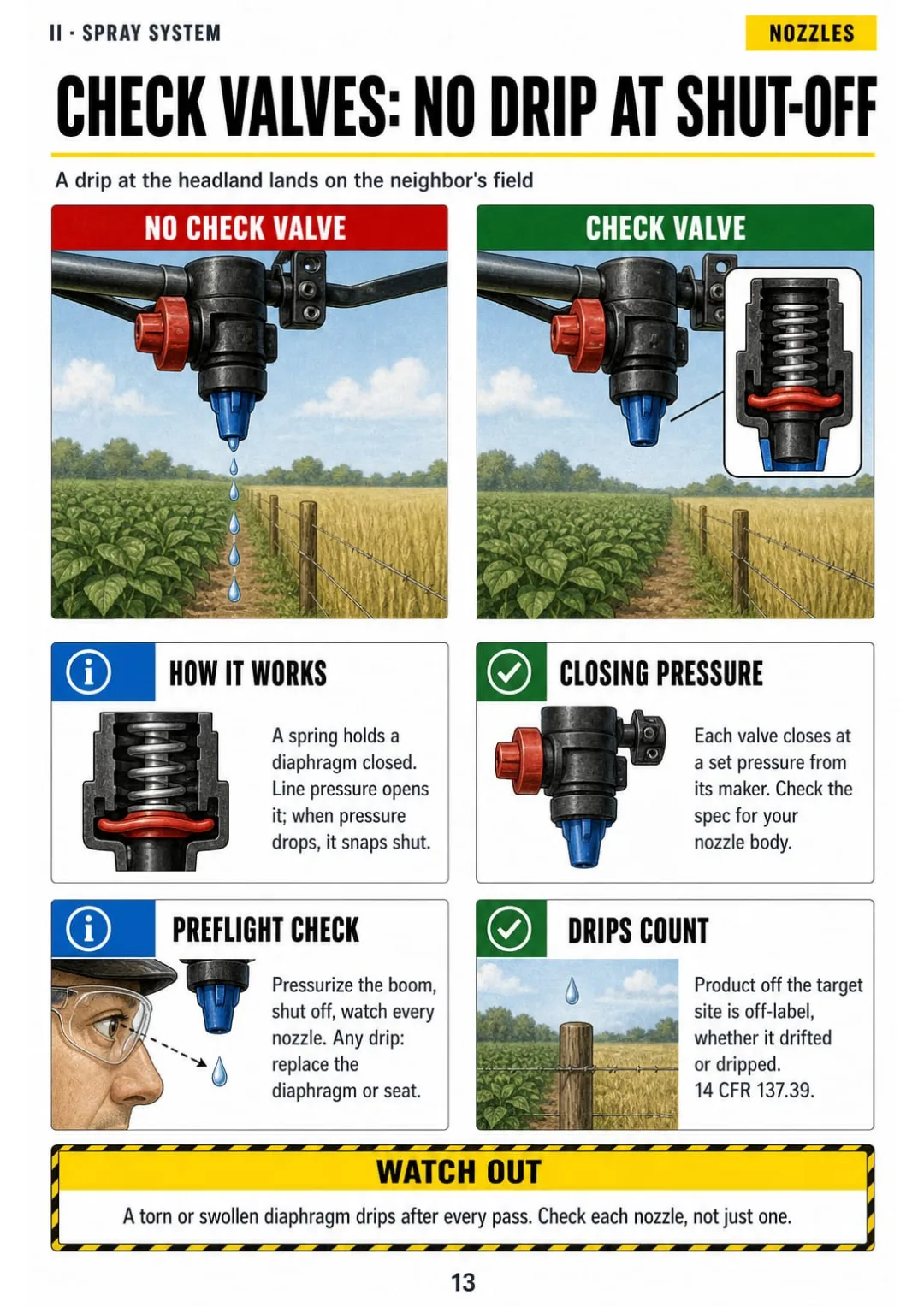
Check valve closed = dry tip at shut-off. Test every nozzle in the preflight.
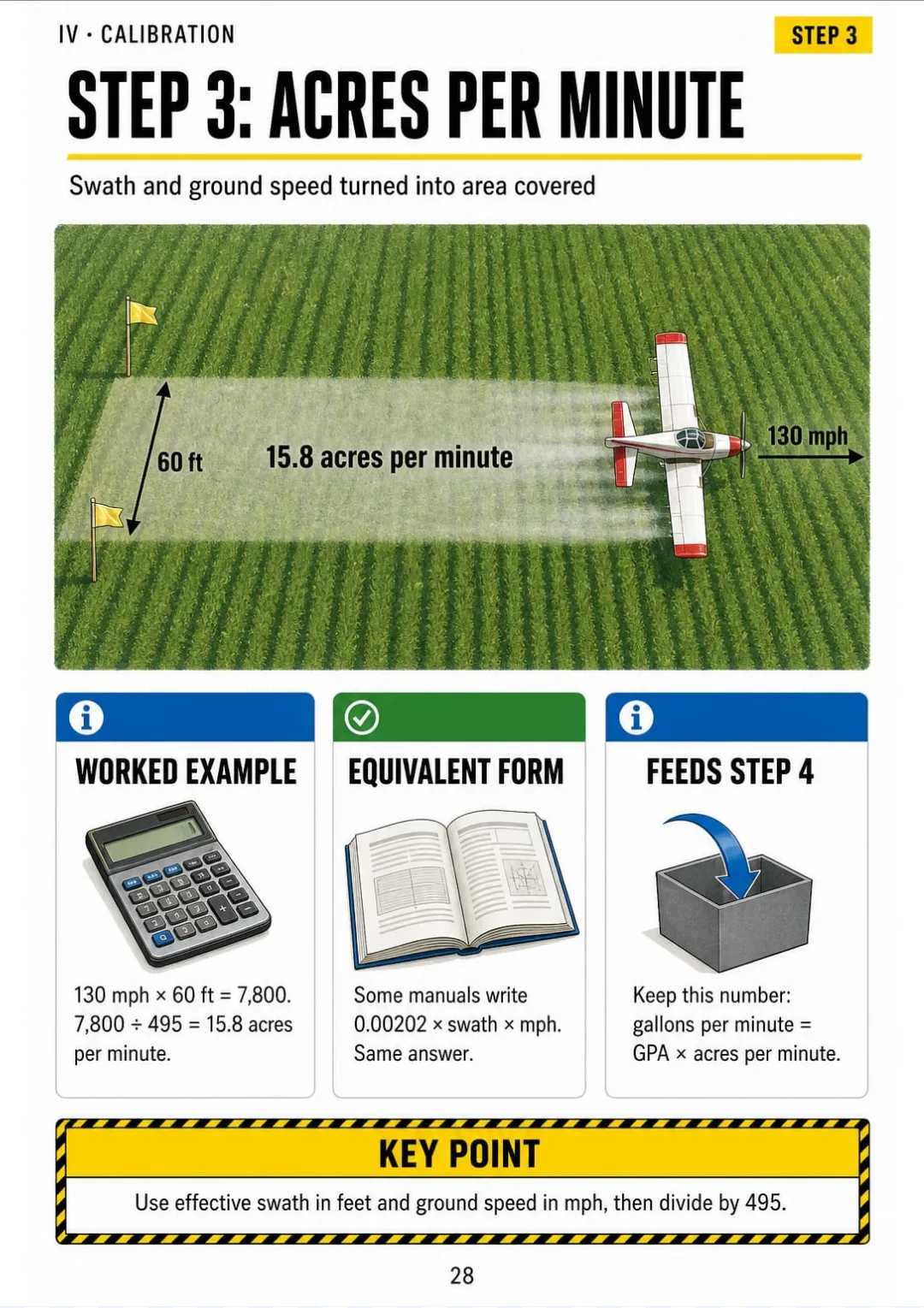
130 mph × 60 ft ÷ 495 = 15.8 acres per minute
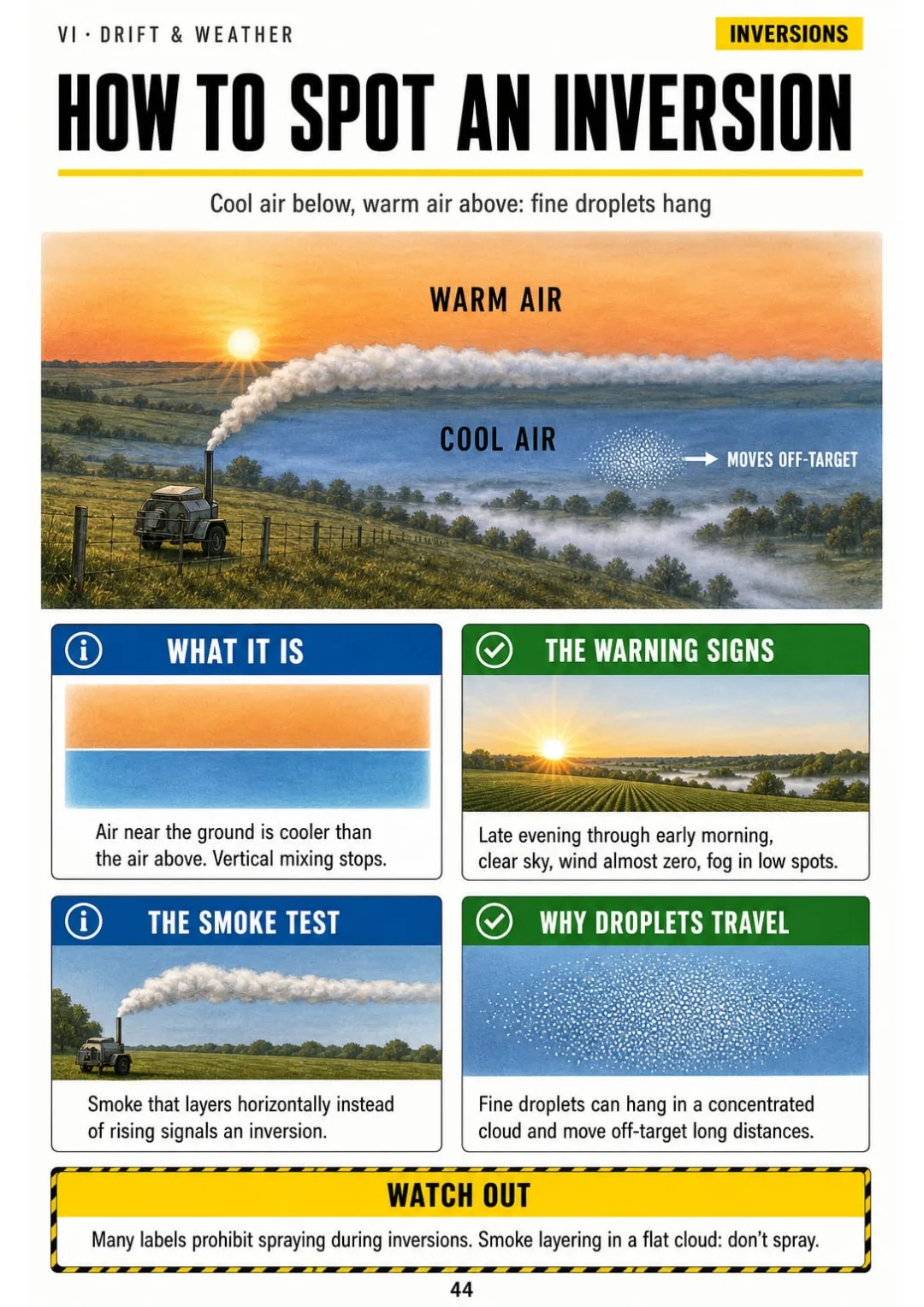
Flat smoke, clear dawn, no wind: the classic signs of a temperature inversion.
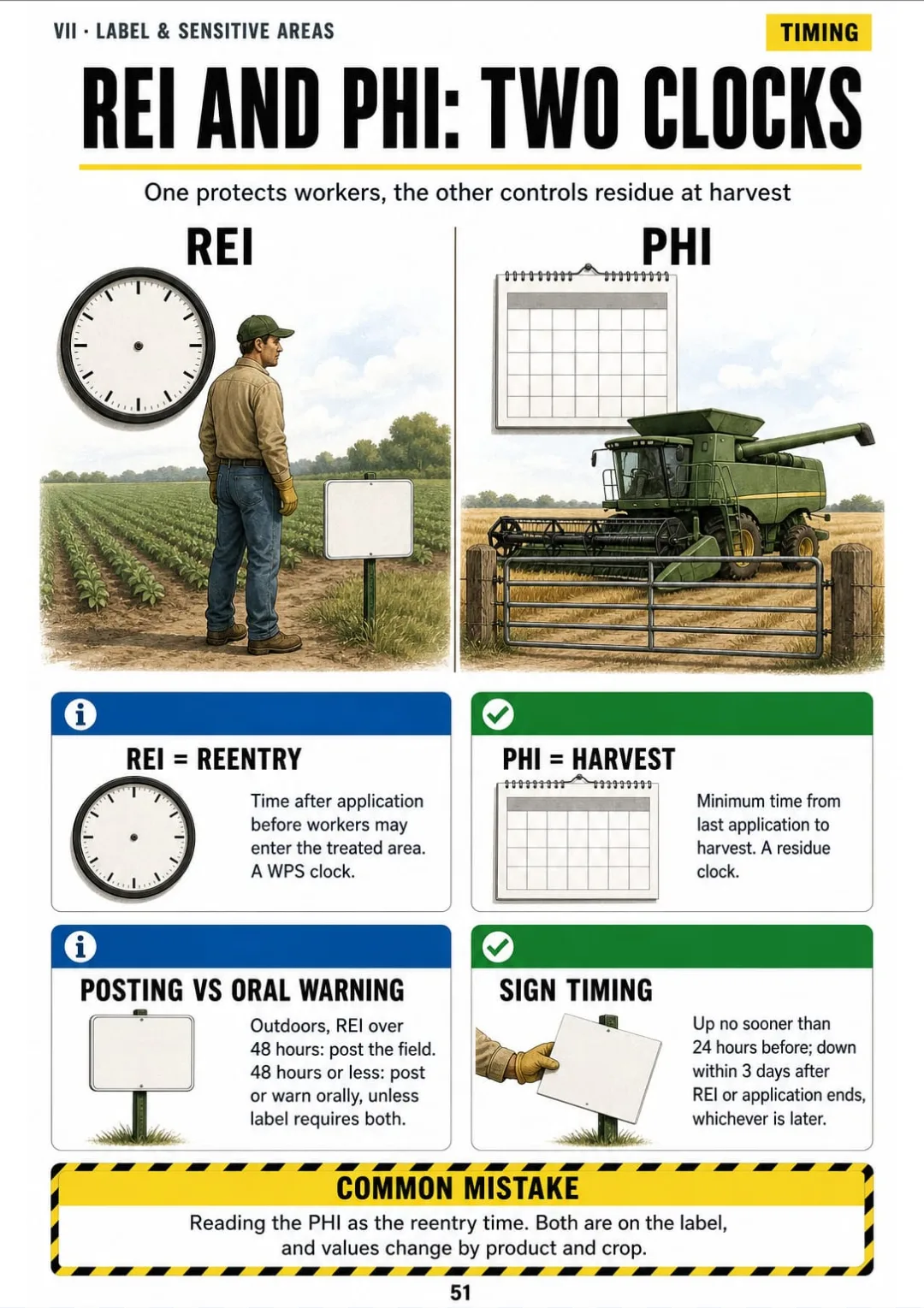
REI = reentry (WPS) · PHI = days to harvest · post when REI > 48 hours
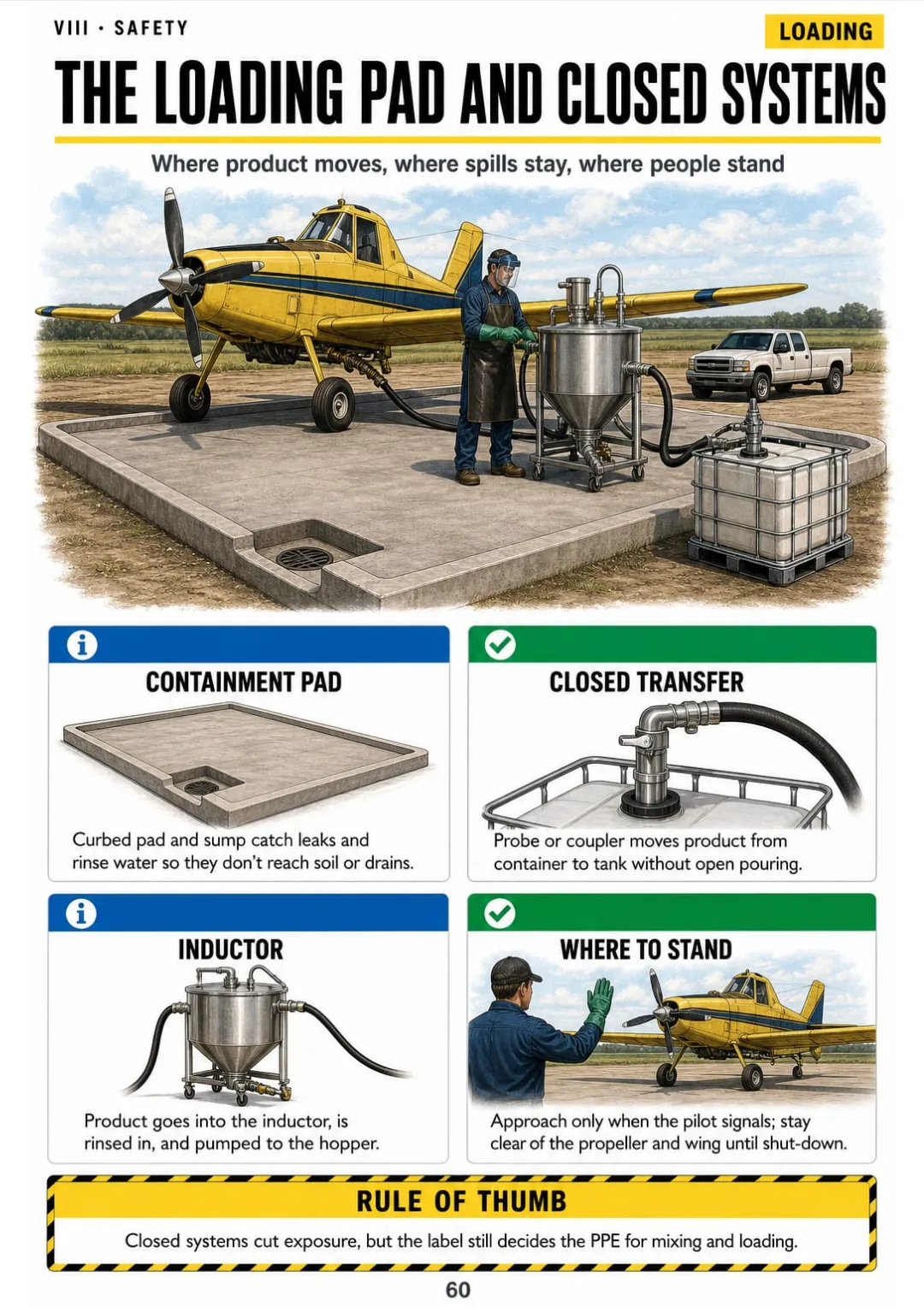
Loading pad, closed transfer system and inductor: what protects the mixer/loader
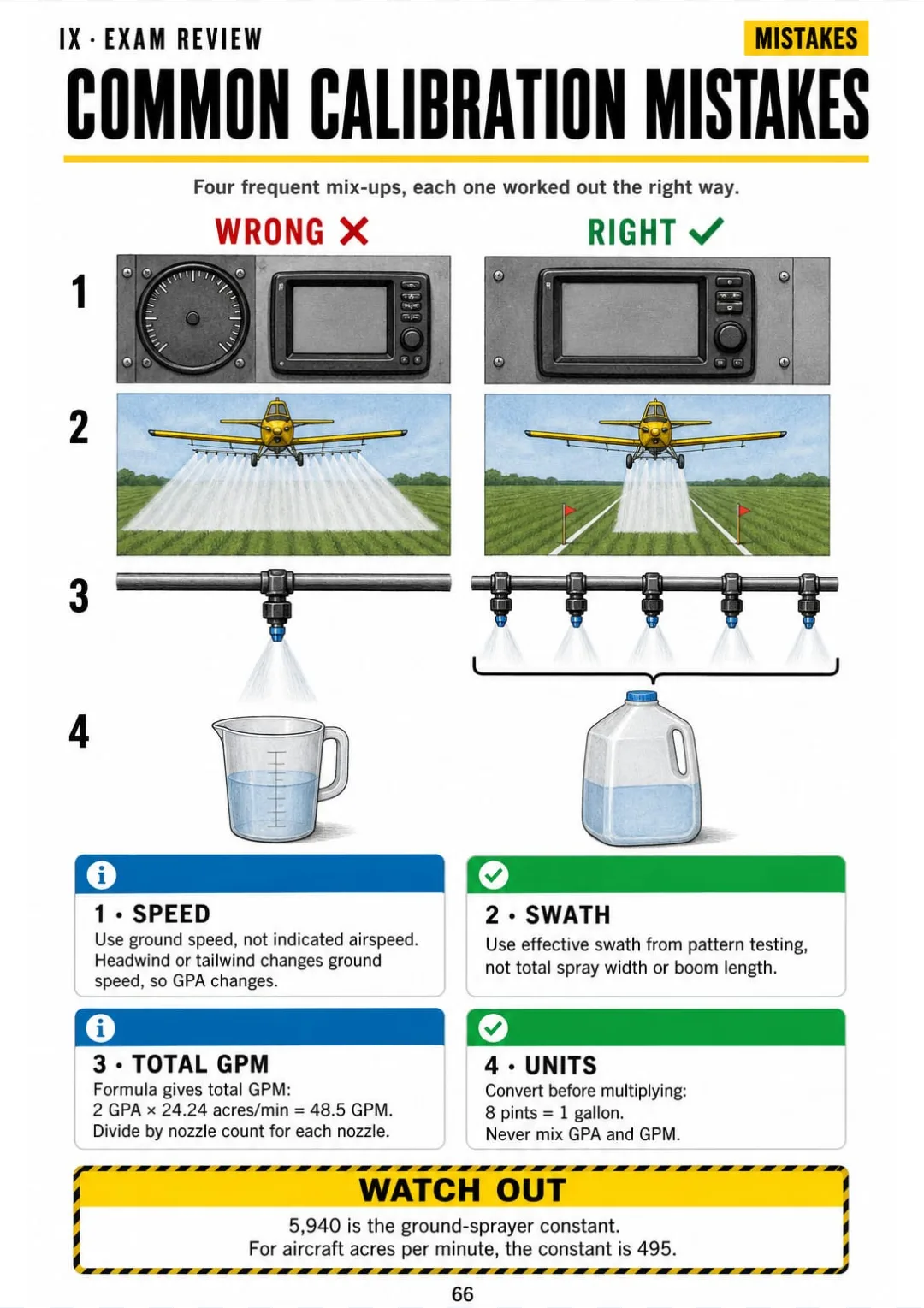
Airspeed, full spray width, per-nozzle GPM, pints: four mistakes, fixed.
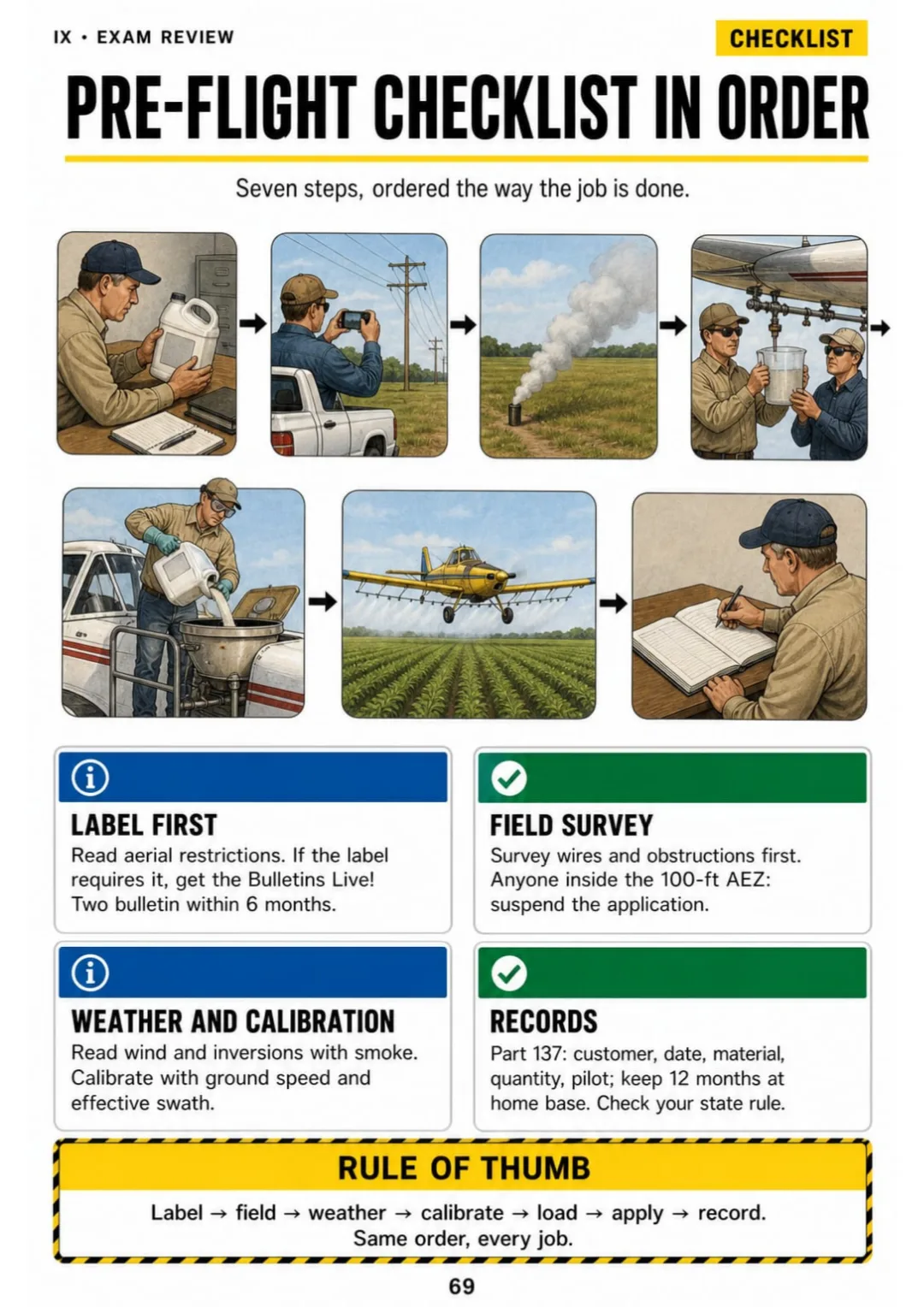
Label, field, weather, calibration, load, apply, record: the checklist in work order.

Swipe to see more →

These are real pages from the book. The table of contents is the full one: 9 parts and 65 topics.

The Problem Isn't You. It's How It Was Explained to You.

It's 6 a.m. The sky is clear, there's no wind, and the smoke from a burn pile is lying flat across the field. You're loaded, and the grower wants it done before breakfast.

Inversions are part of the aerial category exam. But the manual covers them in three dense paragraphs about air layers and lapse rates. None of those words looks like the field in front of you.

Flat smoke, clear dawn, no wind: the classic signs of a temperature inversion.

In this book, the inversion is one page: cool air trapped under warm air, the smoke going flat, the clear dawn, the dead-calm wind, drawn the way you see it from the cockpit. The signs are in the picture, not buried in a paragraph.

Same with acres per minute, REI and PHI, the spray system piece by piece, triple rinsing and the six calibration formulas: each one gets its own page.

You spot the signs, you know why that spray would slide sideways, and you can explain the go/no-go call on the exam the way you'd make it in the field.

COMPARE FOR YOURSELF

Same Topic, Two Ways to Study It

THIS
  • The manual: line after line of small print
  • Calibration math explained only with words
  • You walk into the exam still unsure
The rate of area coverage of an aircraft is a function of its effective swath width and its true ground speed. To determine the number of acres treated per minute, the effective swath width, expressed in feet, is multiplied by the ground speed in miles per hour, and the product is divided by the constant 495, which is derived from the number of square feet in one acre and the conversion of miles per hour to feet per minute. Indicated airspeed should not be substituted for ground speed in this calculation.
FOR THIS
  • Acres per minute in one drawing
  • The formula and a worked example in a box
  • You see it and you get it
130 mph × 60 ft ÷ 495 = 15.8 acres per minute
CONTENTS

Take a Look at the 9 Parts and 65 Topics

The license and the rules, aircraft and spray system, droplets and nozzles, calibration, swath patterns, drift and weather, the label and sensitive areas, safety and the exam review: 69 pages, all illustrated

IThe License and the Rules · pp. 5-10
  1. Core + Aerial: Two Exams, One License
  2. 40 CFR Part 171: What EPA Requires From an Aerial Applicator
  3. FAA Part 137: The Other Certificate You Need
  4. Part 137 in the Air: Congested Areas and Dispensing Rules
  5. FIFRA: The Label Is the Law
  6. Recertification: Keeping the License Alive
IIAircraft and Spray System · pp. 11-17
  1. The Spray System, Piece by Piece
  2. Pumps and Pressure: Wind-Driven vs Hydraulic
  3. Check Valves: No Dripping After Shut-Off
  4. Boom Length and Wingtip Vortices
  5. Helicopter vs Fixed-Wing
  6. Dry Application: Spreaders and Ram-Air
  7. GPS Guidance and Flow Control
IIIDroplets and Nozzles · pp. 18-24
  1. Droplet Size: The Number Behind Every Drift Decision
  2. The ASABE Droplet Classes
  3. Airspeed Shears Droplets
  4. Nozzle Angle: Straight Back Makes Bigger Drops
  5. Pressure and Orifice Size
  6. Nozzle Types for Aircraft
  7. Using the Nozzle Models (USDA-ARS Tables)
IVCalibration, Always in the Same Order · pp. 25-34
  1. The Four Steps: Swath → Speed → Acres/Min → GPM
  2. Step 1: Effective Swath Width
  3. Step 2: Ground Speed, Not Airspeed
  4. Step 3: Acres per Minute
  5. Step 4: Gallons per Minute You Need
  6. Checking GPA From a Known Flow
  7. Choosing Nozzle Number and Size
  8. Measuring Actual Output on the Ground
  9. How Much Product in the Hopper
  10. Dry Calibration: Pounds per Acre
VSwath Patterns and Coverage · pp. 35-40
  1. Pattern Testing: String and Card
  2. Reading the Pattern: Holes, Horns and Off-Center
  3. Overlap and the CV Number
  4. Flight Patterns: Back-and-Forth vs Racetrack
  5. Headlands, Borders and Cleanup Passes
  6. Swath Offset for Crosswind
VIDrift, Weather and Inversions · pp. 41-48
  1. Particle Drift vs Vapor Drift
  2. Release Height
  3. Wind Speed and Direction
  4. Temperature Inversions: How to Spot One
  5. Humidity and Evaporation
  6. Drift Reduction Tools
  7. Downwind Buffers
  8. The Go/No-Go Weather Decision
VIIThe Label and Sensitive Areas · pp. 49-56
  1. Reading a Label in the Same Order
  2. Signal Words and Toxicity
  3. REI and PHI: Two Clocks That Get Mixed Up
  4. Aerial Restrictions on the Label
  5. WPS for Aerial: The Application Exclusion Zone
  6. Pollinators and the Bee Advisory Box
  7. Water, Wetlands and Endangered Species
  8. Sensitive Sites: Homes, Schools, Organic Fields
VIIISafety: Pilot, Ground Crew and Spills · pp. 57-64
  1. Wires and Obstacles: The Field Survey
  2. Pilot PPE and Cockpit Contamination
  3. Fatigue, Heat and Exposure Symptoms
  4. The Loading Pad and Closed Systems
  5. Mixing Order and the Jar Test
  6. Container Rinsing and Disposal
  7. Spills and Emergency Landings: Control, Contain, Clean Up
  8. Application Records
IXExam Review · pp. 65-69
  1. The Calibration Formulas on One Page
  2. Most Common Calibration Mistakes
  3. Drift and Weather: Quick Review
  4. Label Terms You Must Know
  5. Pre-Flight Checklist in the Same Order

One Page, One Topic, All Clear

Think of it this way:

It's the week before your exam and you hit a practice calibration problem: 60-foot swath, 130 mph, 2 gallons per acre. What's the GPM? The numbers start to blur together.

You open the book to Step 3 and see the aircraft over a strip of field: 60 times 130, divided by 495, is 15.8 acres per minute. Turn the page to Step 4: times 2 gallons per acre, 31.6 GPM.

Loading pad, closed transfer system and inductor: what protects the mixer/loader

Same with release height, temperature inversions, REI and PHI, the spray system and container rinsing: each one on its own page, drawn the way you see it in the field.

Aerial Applicator Illustrated is 9 parts and 65 topics, all drawn, and at the end the calibration formulas on one page, the most common calibration mistakes and a pre-flight checklist.


What you see drawn, you don't have to memorize.

What's Inside Aerial Applicator Illustrated:

Ipp. 5-10

The License and the Rules

Core plus aerial, what EPA 40 CFR Part 171 requires, FAA Part 137, congested areas, FIFRA and why the label is the law, recertification.

IIpp. 11-17

Aircraft and Spray System

The spray system piece by piece, wind-driven vs hydraulic pumps, check valves, boom length and wingtip vortices, helicopter vs fixed-wing, dry spreaders, GPS and flow control.

IIIpp. 18-24

Droplets and Nozzles

Droplet size, the ASABE droplet classes, airspeed shear, nozzle angle, pressure and orifice size, aircraft nozzle types and the USDA-ARS nozzle models.

IVpp. 25-34

Calibration, Always in the Same Order

Calibration in four steps, always in the same order (effective swath, ground speed, acres per minute, gallons per minute), so you always know which number comes next. Plus checking GPA, nozzle sizing, ground output tests, hopper loads and dry calibration.

Vpp. 35-40

Swath Patterns and Coverage

String and card pattern testing, holes, horns and off-center patterns, overlap and CV, back-and-forth vs racetrack, headlands and crosswind offset.

VIpp. 41-48

Drift, Weather and Inversions

Particle vs vapor drift, release height, wind, how to spot an inversion, humidity, drift reduction tools, downwind buffers and the go/no-go call.

VIIpp. 49-56

The Label and Sensitive Areas

Reading a label in order, signal words, REI vs PHI, aerial restrictions, the WPS application exclusion zone, pollinators, water and endangered species, sensitive sites.

VIIIpp. 57-64

Safety: Pilot, Ground Crew and Spills

Wires and the field survey, pilot PPE, fatigue and exposure symptoms, the loading pad, mixing order and jar test, rinsing and disposal, spills, emergency landings and records.

IXpp. 65-69

Exam Review

The calibration formulas on one page, the most common calibration mistakes, drift and weather review, label terms and the pre-flight checklist.

At the end of the book: An exam review part: the calibration formulas on one page, the most common calibration mistakes and a pre-flight checklist.

Plus: 2 Free Books

Aerial Category Practice Questions (with Answers Explained)

BONUS 1: «Aerial Category Practice Questions (with Answers Explained)»

Value on its own: US$ 17.90

Exam-style questions on calibration, drift, label reading and laws, each with the answer and the page to review, so you find your weak spots before test day.

Aerial Quick-Reference Cards

BONUS 2: «Aerial Quick-Reference Cards»

Value on its own: US$ 14.90

The formulas, weather limits, droplet size classes and label terms on printable cards you can keep in the truck or the hangar for a fast review.

Aerial Applicator Illustrated with 2 Free Books

  • Aerial Applicator Illustrated: 69 illustrated pagesUS$ 63
  • BONUS 1: Aerial Category Practice Questions (with Answers Explained)US$ 17.90
  • BONUS 2: Aerial Quick-Reference CardsUS$ 14.90
  • High-resolution PDF to printIncluded
Total value US$ 95.80
YOUR PRICE:
US$ 27
You save US$ 68.80
YES, I WANT AERIAL APPLICATOR ILLUSTRATED FOR US$ 27

📄 This is a digital PDF book sent to your email: nothing is printed or shipped.

Secure purchaseEncrypted payment30-day guarantee

PDF by email: We email you Aerial Applicator Illustrated as a PDF, together with the two free books. It's a single payment: no installments, no extra charges.

Who This Book Is For

You're studying for the aerial category

You're studying for the aerial category

You get the manual's topics in the order you use them in the field, one drawing per page, so the math and the label stop being a pile of small print.

Your state exam is coming up

Your state exam is coming up

You review the calibration formulas, drift signs and label terms at a glance, and check your weak spots with the practice questions.

You already fly or load ag aircraft

You already fly or load ag aircraft

You keep it printed in the hangar or the truck: the formulas, the weather limits and REI vs PHI, ready for recertification or a quick check.

Everything You Get Today

US$ 95.80US$ 27
YES, I WANT AERIAL APPLICATOR ILLUSTRATED FOR US$ 27

📄 This is a digital PDF book sent to your email: nothing is printed or shipped.

30DAYS
GUARANTEE

30-Day Guarantee

Try Aerial Applicator Illustrated for 30 days, bonus books included.

We refund everything if the file won't open, if the book isn't what you see here, if you were charged twice or if the email doesn't arrive. Just email us.

You pay once. No subscriptions.

Frequently Asked Questions

Is it for me if I've flown or loaded for years but haven't taken a written exam in a long time?

Yes. It skips the basics you already know and goes straight to what gets asked: calibration math, drift, label rules and laws, one topic per page.

Will it work for my state's exam? Where does the content come from?

It covers the national material every state builds on: the National Aerial Applicator certification study guide, EPA 40 CFR Part 171, FAA Part 137, the Worker Protection Standard and FIFRA labeling. Each state adds its own rules, so those are flagged on the page for you to verify with your State Lead Agency.

Is this official material?

No. It's an independent illustrated study book. It isn't issued or endorsed by EPA, FAA or any state agency, and it doesn't give you a certificate, a license or recertification credits.

Does it replace the official manual or training?

No. It draws and organizes the topics so you can review them faster. Your state's official materials, the product label and required training still come first.

Are the practice questions the ones on the exam?

No. They're written for this book, in exam style, with the answer explained and the page to review. They aren't official exam questions.

When and how do I get it?

The book and the 2 bonus books come as PDFs by email, to the address you enter at checkout.

Do I have to pay every month?

No. It's a one-time payment.

Can I have it on paper?

Yes. The PDFs are printable, at home or at any print shop, so you can keep a copy in the hangar or the truck.

How does the refund work?

You have 30 days. We refund everything if the file won't open, if the book isn't what you see on this page, if you were charged twice or if the email doesn't arrive: just email us.

Before You Close This Page

No more rereading the manual with nothing sticking.

Acres per minute: you see it drawn and you've got it.

You walk into the exam knowing where everything is.

Drawings make studying faster.

The book is right below.

One-time payment: US$ 27 · Guarantee: 30 days · PDF by email

YES, I WANT AERIAL APPLICATOR ILLUSTRATED FOR US$ 27

📄 This is a digital PDF book sent to your email: nothing is printed or shipped.